
Our Impact
Our Impact: A History of Action.
A New Chapter of Growth.
How Colorado Got Here
Colorado has become one of the states with the fewest restrictions on abortion. Abortion is legal throughout all nine months of pregnancy, and in 2024, voters made abortion a protected right in the Colorado Constitution. This makes it much harder to pass laws protecting unborn children. Other laws have expanded taxpayer funding for abortion and protections for abortion providers.
Here is how Colorado got here, one law at a time.
- 2020
Rejected by voters
Proposition 115 — Prohibit Abortions After 22 Weeks
Colorado Voters Reject Limits on Late-Term Abortion
Colorado voters rejected a proposal to ban most abortions after 22 weeks of pregnancy. This left Colorado without a limit on how late in pregnancy an abortion can take place, even during the final months before birth.
- 2022
Enacted
HB22-1279 — Reproductive Health Equity Act
Colorado Declares Unborn Babies Have No Legal Rights of Their Own
Colorado lawmakers passed a law stating that unborn babies have no rights of their own under state law. The law also protects the ability to obtain an abortion throughout pregnancy and prevents state and local governments from restricting that right.
- 2023
Enacted
SB23-188 — Protections For Accessing Reproductive Health Care
Colorado Protects Abortion Providers From Other States’ Laws
This law shields abortion providers in Colorado from certain investigations and lawsuits brought by states with stronger abortion restrictions. It also makes it harder for local communities to prevent abortion clinics from opening in areas where other medical facilities are allowed.
- 2023
Enacted
SB23-189 — Increasing Access To Reproductive Health Care
Colorado Requires Many Health Insurance Plans to Cover Abortion
This law requires many Colorado-regulated health insurance plans to pay for abortions, often without deductibles or copayments. This means many insured patients can obtain abortions without paying additional costs for the procedure.
- 2023
Enacted; limited injunction issued August 2025
SB23-190 — Deceptive Trade Practice Pregnancy-related Service
Colorado Restricts Pregnancy Help Centers and Abortion-Pill Reversal
This law places new advertising restrictions on pregnancy help centers and other providers. It also attempted to stop medical professionals from offering abortion-pill reversal, a treatment some providers offer to women who want to continue their pregnancies after taking the first abortion pill.
In 2025, a federal court blocked the state from enforcing the abortion-pill reversal restriction against the providers who challenged it.
- 2024
Approved by voters
Amendment 79 — Constitutional Right to Abortion
Colorado Makes Abortion a Constitutional Right
Colorado voters added abortion rights to the state constitution, making it much harder to pass laws protecting unborn children from abortion. The amendment also removed the state’s constitutional ban on using public money to pay for abortions, opening the door to taxpayer-funded abortion.
- 2025
Enacted
SB25-183 — Coverage for Pregnancy-Related Services
Colorado Requires Taxpayers to Fund Abortions
Beginning in January 2026, this law requires Colorado to use state tax dollars to pay for abortions through Medicaid and certain other public health programs. It also expands abortion coverage requirements for state-regulated health insurance plans, including public employee plans, with some exceptions.
- 2025
Enacted in special session
SB25B-002 — State-Only Funding for Certain Entities
Colorado Uses State Tax Dollars to Replace Federal Funding for Certain Abortion Providers
When the federal government stopped certain Medicaid payments to qualifying abortion providers, Colorado passed a law to replace that money with state tax dollars.
This allows qualifying providers, including Planned Parenthood facilities that meet the requirements, to continue receiving state payments for other Medicaid services. This law does not directly pay for abortions.
- 2026
Enacted; access requirement begins in 2027
HB26-1335 — Abortion Medication Access on College Campuses
Colorado Requires College Health Centers to Provide Access to Abortion Pills
Starting in August 2027, Colorado colleges with student health centers must help students obtain abortion pills, with some exceptions. Campus pharmacies generally must stock these drugs, while other schools must provide access through prescriptions or outside providers. The law includes religious and other exceptions.
Our History: Bringing Coloradans Together for Life

Pro-Life Colorado grew out of a shared recognition that organizations across our state could accomplish more by working together.
Over the years, our coalition has connected organizations, shared information about important legislation, provided educational resources, and encouraged statewide participation in conversations about the value of human life.
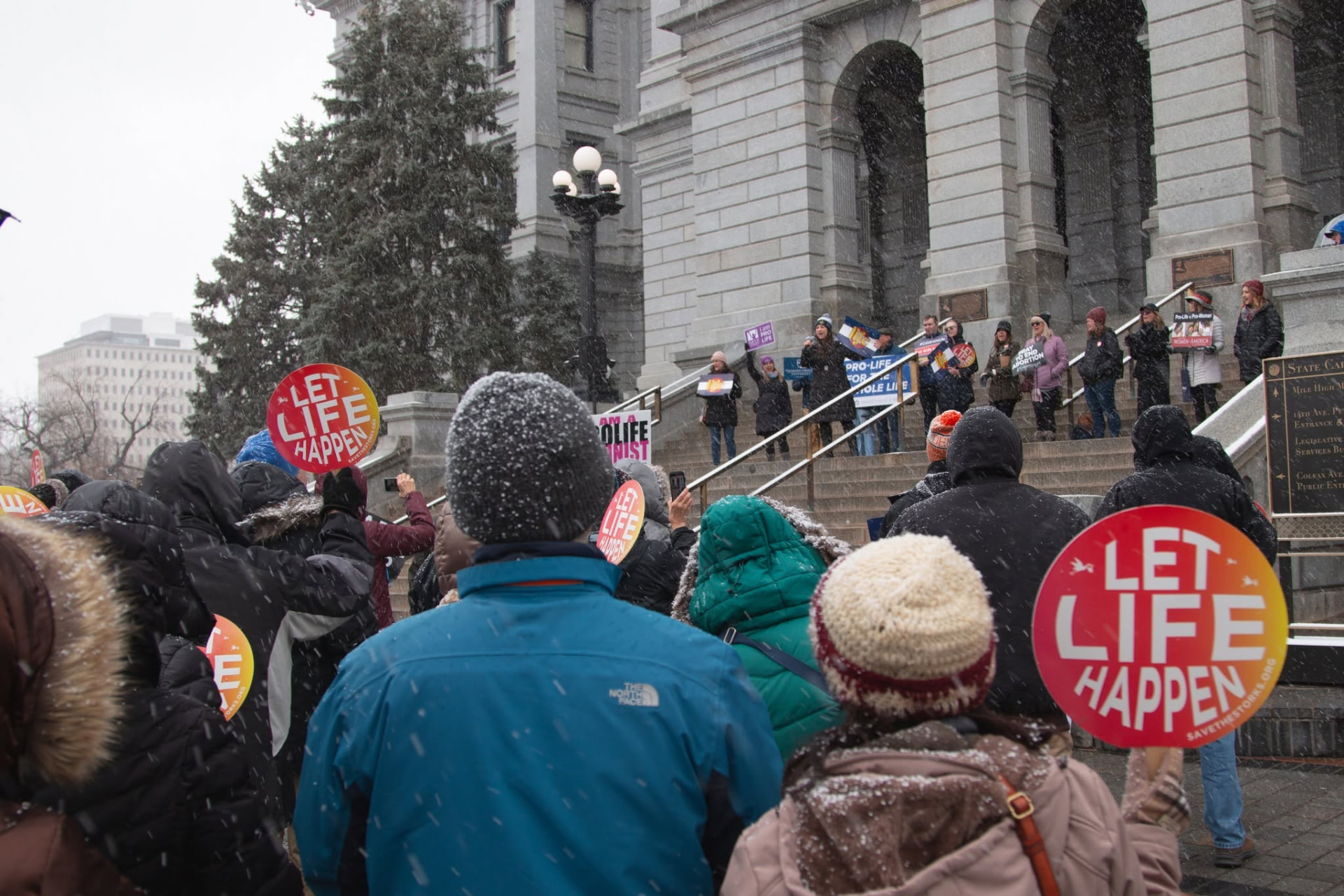
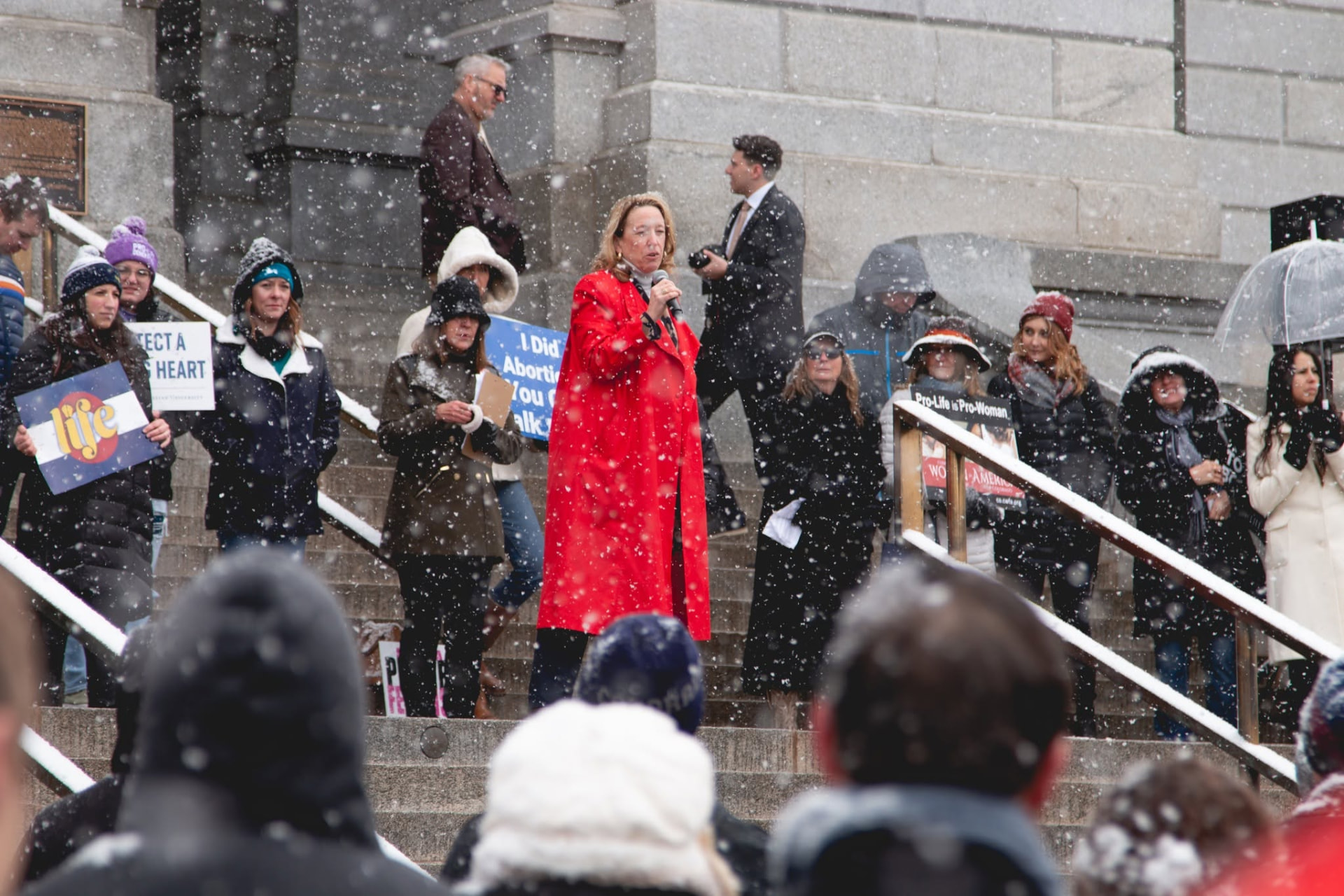
Our history also includes organizing public gatherings, sponsoring health fairs, offering educational presentations and training, and helping bring thousands of Coloradans together through the annual Colorado March for Life.
Through these efforts, we have strengthened relationships among organizations and created opportunities for people throughout Colorado to become informed, connected, and involved.
Today, we’re building on that foundation with a broader, year-round strategy focused on influencing all areas of Colorado’s culture.
- Coalition building
- Connecting organizations, churches, professionals, and individuals across Colorado around a shared commitment to life.
- Education and public awareness
- Sharing information about abortion-related legislation and connecting Coloradans with educational resources to understand what the law says.
- Historical public engagement
- Helping people understand legislative developments and the role of public participation, while keeping charitable education distinct from direct political advocacy.
- Community outreach
- Sponsoring health fairs, providing free resources, and connecting individuals with life-affirming organizations that serve women and families.
- Educational presentations and training
- Equipping people of different ages to understand abortion and Colorado law and to have informed, compassionate conversations about life.
- Colorado March for Life
- Bringing thousands of Coloradans together through the annual March. Pro-Life Colorado is the event’s sole financial sponsor, with support and assistance from the national March for Life organization. Financial sponsorship does not mean sole ownership or sole operational responsibility.
Pro-Life Colorado is a 501(c)(3) charitable organization. Its separate partner, Pro-Life Colorado Action, is a 501(c)(4) organization focused on direct political and legislative advocacy.
Pro-Life Colorado ActionWhy We're Expanding Now
We've Built the Foundation. Now We're Building the Infrastructure.
For several years, Pro-Life Colorado operated primarily through the collaborative efforts of participating organizations and volunteers.
That approach allowed us to share educational information, develop relationships, and help organize major events.
Now we are building the capacity for more consistent, year-round work.
By establishing an independent organizational structure and hiring an executive director, Pro-Life Colorado is able to focus on long-term planning, statewide relationships, coordinated projects, fundraising, and organizational growth.
Expanded work includes:
- Growing and strengthening our statewide coalition
- Developing strategy groups in seven areas of cultural influence
- Providing educational presentations for all ages.
- Teaching persuasive, thoughtful pro-life conversation skills
- Reaching churches, schools, youth groups, and college campuses
- Supporting collaboration between organizations
- Coordinating statewide initiatives
- Building a sustainable financial foundation
- Maintaining and funding the Colorado March for Life
We've Built a Foundation.
Now We're Building a Movement.
Our past demonstrates the importance of working together. Our future is focused on strengthening those relationships and building the capacity for sustained statewide engagement.